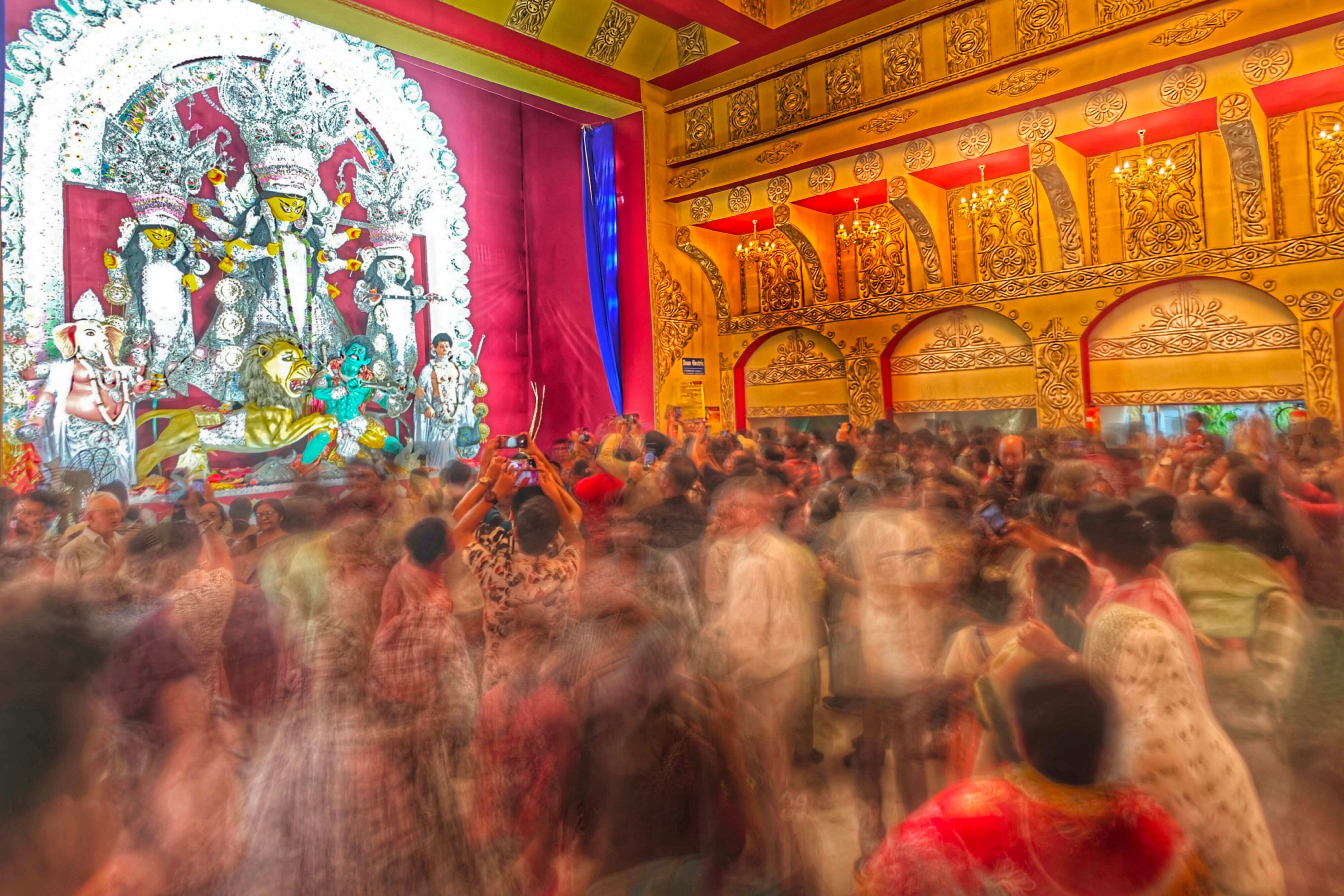
If you’re planning your first Durga Puja in Kolkata, the four days that matter most are Saptami, Ashtami, Navami and Dashami — the heart of the festival, when the city turns into the world’s largest open-air art gallery and every street becomes a stage for devotion, music, food and light. This guide walks you through what each day means, when it falls in 2026, and exactly how to experience it like someone who’s been coming for years.
When Is Durga Puja 2026 in Kolkata? Saptami, Ashtami, Navami and Dashami Dates
According to most Kolkata panchangs (almanacs), Durga Puja 2026 runs as follows:
| Day | Date (2026) | Significance |
|---|---|---|
| Mahalaya | Saturday, 10 October | Devi Paksha begins |
| Maha Shashthi | Friday, 16 October | Goddess unveiled (Bodhon) |
| Maha Saptami | Sunday, 18 October | Full worship begins |
| Maha Ashtami | Monday, 19 October | Holiest day; Sandhi Puja |
| Maha Navami | Tuesday, 20 October | Final day of worship |
| Vijaya Dashami | Wednesday, 21 October | Immersion and farewell |
A quick, honest caveat: because Hindu festival dates follow lunar tithis rather than the fixed solar calendar, a tithi can occasionally begin or end mid-day. This is why you’ll sometimes see Ashtami or Navami listed a day earlier or later across different panchangs. The Kolkata panchang — the one that governs the city’s community pujas — is the version used above. It’s always worth confirming exact ritual timings with your host family or the local puja committee once you’re on the ground.
Maha Saptami: When the Real Celebration Begins
Saptami is when Durga Puja properly opens for the public. The signature ritual of the day is the Nabapatrika Snan — the ceremonial bathing of nine sacred plants tied together and dressed in a bridal sari. People popularly call this bundle Kola Bou (“banana-tree bride”). It represents nine forms of the Goddess, and devotees place it beside Ganesha’s idol before sunrise.
For a first-time visitor, Saptami morning is a hidden gem. The pandal committees have fully decorated the pandals, the crowds have not peaked yet, and the soft light creates ideal conditions for photography. Kolkata locals will tell you that Shashthi and Saptami mornings offer a calm before the storm. Use these hours to visit heritage pandals in North Kolkata, such as Bagbazar Sarbojanin and College Square, famous for its lake reflections. You can also visit Kumartuli, the potters’ quarter where artisans handcraft clay idols using soil from the Hooghly riverbed.
Maha Ashtami: The Holiest Day of Durga Puja
If you only experience one day of the festival, make it Ashtami. Widely considered the most spiritually charged day of Durga Puja, Ashtami centres on three major rituals:
- Pushpanjali — devotees, often fasting, offer flowers with mantras to the Goddess in a collective morning prayer that draws enormous queues at every major pandal.
- Kumari Puja — a young, pre-pubescent girl is worshipped as a living embodiment of the Goddess, a tradition made famous at Belur Math.
- Sandhi Puja — performed at the precise 48-minute junction between Ashtami and Navami tithis, when 108 lotuses and 108 lamps are offered. This moment is believed to mark the instant Durga struck her final blow against the demon Mahishasura, and the atmosphere across the city turns electric.
As evening falls, pandals come alive with the dhunuchi naach, where devotees dance holding earthen pots of burning camphor and coconut husk to the beat of the dhaak (traditional drum). Plan to arrive early for Pushpanjali and check individual pandal notice boards for their announced Sandhi Puja window — timings vary slightly from pandal to pandal.
Maha Navami: Bhog, Music and the Last Full Day of Worship
Navami marks the final full day of worship before the Goddess’s farewell. Many devotees begin the day with a ritual bath (Mahasnan) before offering prayers. Navami is also when community kitchens serve bhog — a traditional vegetarian feast of khichuri, labra (mixed vegetables), begun bhaja (fried eggplant), chutney and mishti doi (sweet yogurt) — to thousands of devotees at a single sitting.
Evenings on Navami are less frantic than Ashtami but arguably more joyous, filled with cultural programmes, live music and dance performances at neighbourhood pandals. This is a good night to visit South Kolkata’s theme-based pandals — Tridhara, Suruchi Sangha, Jodhpur Park and the ever-crowded Sreebhumi — ideally by early evening, before the queues stretch for hours.
Vijaya Dashami: Immersion, Sindoor Khela and Bijoya
Vijaya Dashami, which coincides with Dussehra elsewhere in India and is called Bijoya Dashami in Bengal, brings the festival to its emotional close. Married women perform Sindoor Khela, smearing vermilion on one another in a joyful yet tearful farewell ritual, before devotees carry the idols in procession to the Hooghly River for immersion (visarjan).
For visitors, Dashami is the single best day to see Kolkata’s community spirit on full display — but it’s also the most crowded and traffic-choked. If you want the spectacle of the immersion processions along the riverbank, get there well before sunset and expect the walk back to take far longer than the walk in.
How to Pandal-Hop Like a Local: Practical Tips for First-Timers
Kolkata has over 3,000 registered Durga Puja pandals, so trying to see them all will only exhaust you. A realistic target is four to six pandals a night, grouped by neighbourhood:
- North Kolkata (heritage circuit): Bagbazar Sarbojanin, Kumartuli Park, Mohammad Ali Park, College Square, Hatibagan Sarbojanin
- Central Kolkata: Santosh Mitra Square, College Street area — best visited early before queues build
- South Kolkata (theme circuit): Tridhara, Mudiali, Jodhpur Park, Suruchi Sangha, Sreebhumi
Getting around: The Kolkata Metro runs extended hours throughout the festival and offers the fastest way to cross the city. Road closures and diversions around major pandals make driving difficult. Take the Metro between neighbourhoods instead. Walk within each pandal cluster, as most areas are easiest to explore on foot. App-based cabs become nearly unusable between 7 PM and 2 AM. Surge pricing rises, and road closures slow traffic significantly. Save app-based cabs for daytime trips.
What to wear and carry: October in Kolkata typically brings warm, humid weather, with temperatures ranging from 24°C to 33°C. Pack light cotton clothes, comfortable walking shoes, and a small umbrella. Many visitors also buy at least one set of new Bengali-style clothing to embrace the cherished Puja tradition. Expect to cover 8–15 km of walking on a busy pandal-hopping night, so break in your shoes beforehand.
When to go: Shashthi and Saptami mornings are calm; Ashtami and Navami nights are spectacular but dense with crowds; Dashami is unmissable but the most chaotic of all. If it’s your first visit, spread your pandal trail across Saptami and Navami, and treat Ashtami night as the one evening you commit fully to the crowds for Sandhi Puja.
Don’t Miss: Kumartuli and Bengali Festival Food
No first-timer’s guide to Durga Puja in Kolkata is complete without two detours. First, visit Kumartuli, the century-old artisans’ quarter beside the Hooghly River. Kumors hand-sculpt clay idols there, continuing a craft tradition spanning generations. Visit a day or two before Shashthi to see artisans finishing idols. Second, eat your way through the festival and explore Kolkata’s famous food.
Beyond community bhog on Ashtami and Navami, explore street stalls near pandals. Vendors serve Kolkata classics like phuchka, kathi rolls, biryani and Bengali sweets. These delicious treats form an essential part of the pandal-hopping experience.